
Why UD’s game-day atmosphere falls flat, and what solutions can bring students back
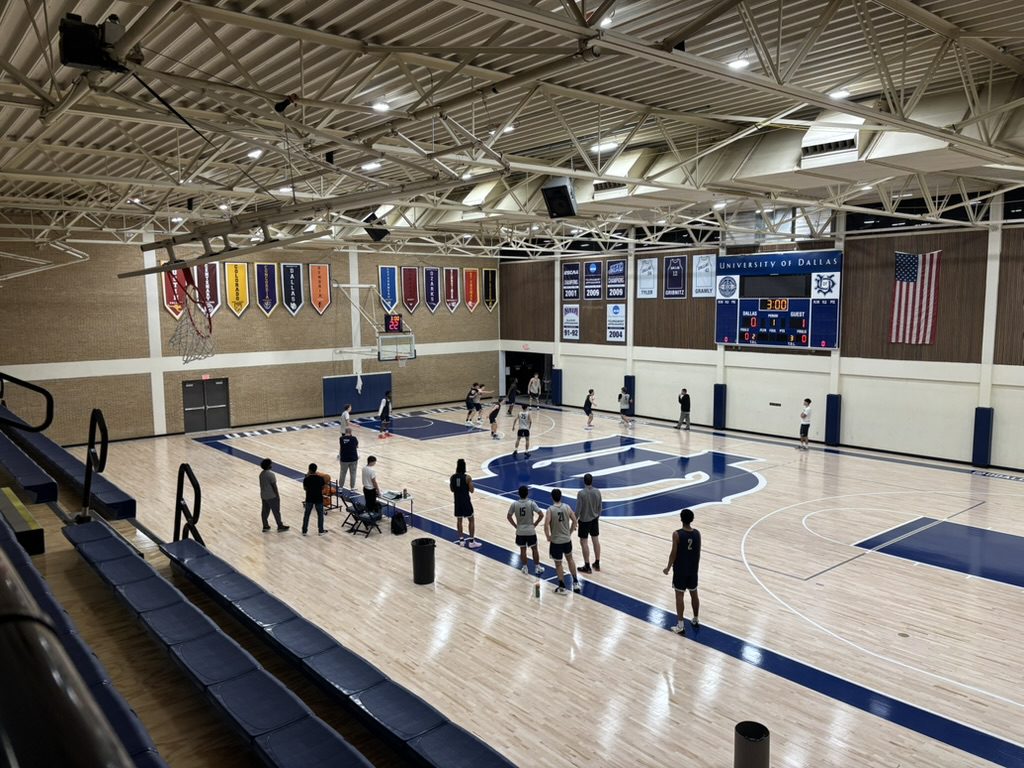
At most colleges, game day is a heartbeat of campus life — a place where students rally behind a shared identity, cheer until they lose their voices and create memories that outlast their time in school. At the University of Dallas, however, the stands often tell a different story. Aside from men’s basketball, many UD athletic events feel more like rec-league matchups than NCAA contests, with bleachers filled mostly by athletes supporting each other, plus the occasional friend or family member. For a university that prides itself on community and tradition, this gap between students and sports raises a simple question: Why don’t UD students go to games, and more importantly, how do we fix it?
The first and clearest reality is this: UD has no established culture of attendance. Students don’t wake up thinking about the next home game because, to be blunt, no one tells them when it is. As one student put it, they’ve been here for three years and couldn’t name the date of the next basketball game. The problem isn’t apathy; its absence — specifically, the absence of promotion, tradition and energy around athletics. UD is an academically oriented school, and that’s a strength. But academic rigor doesn’t have to kill school spirit. At universities of all sizes, strong academic cultures coexist with vibrant game-day environments. The difference is that those campuses give students a reason to show up.
Most UD students don’t actively dislike sports; instead, they’ve never been given a compelling reason to go. Many people at larger colleges attend games not for the action on the field but for the promotions: free shirts, bobbleheads, discounted food, theme nights or giveaways. Most people who go to a baseball game for dollar-dog night aren’t even there for the game; they’re there for the promotion, with the game as the icing on top. At UD, that icing is all there is. Without promotions, game-day events feel unstimulating. Students see sports as another campus obligation rather than a source of genuine fun.
There is also a perception problem. Many UD students dismiss athletics because they view it as “just D3” and therefore assume the talent level is low. This isn’t fair — the athletes are legitimately talented — but perception drives behavior, and UD has done little to challenge that narrative. The absence of a football team doesn’t help either. At many colleges, football creates the gravitational pull that energizes everything else — tailgates, school pride, traditions and rivalries. Without it, smaller sports have to work harder to build identity, and UD has never made that push.
The men’s basketball team is the exception. Those games have a real atmosphere — student noise, energy and some genuine home-court advantage. But that success also proves a larger point: UD students will show up when a product is marketed, exciting and socially engaging. The challenge is bringing that same spark to all sports, not just one. UD technically has a spirit tradition — Blue Crew — but it faded years ago. Ironically, a club sport (rugby) maintains more tradition and student commitment than varsity athletics. When athletes feel disconnected from the student body and students feel disconnected from athletics, both sides lose out on what college sports can be: a shared experience.

Fixing this is not complicated. One solution is to rebuild Blue Crew from the ground up, not as a passive spirit organization but as an active, loud, fun, student-run hype squad. Shirts, chants, tailgates, theme nights — the works. If done right, it becomes a social identity. Just as important is introducing real promotions. UD Athletics cannot rely on the game alone to draw students. Free food nights, faculty–student nights, “first 50 students get a shirt,” residence-hall rivalry nights, DJ booths for soccer or baseball and alumni-sponsored giveaways are low-cost, high-impact ideas that would genuinely work here.
Another fix is improving communication and advertising. Game dates should be impossible to miss. TikTok or Instagram reels, player spotlights, QR-coded posters in Haggar and the dorms, weekly athletics email blasts, and closer coordination with RAs would make games feel present in campus life rather than invisible. Most students don’t follow athletics accounts — so athletics needs to meet them where they already are.
Games also need to become social events rather than obligations. If students spend most weekends partying in the condos, then athletics should find ways to integrate game-day energy into that existing rhythm. Pre-game events, post-game socials, collaborations with clubs, live music, food tables and outdoor viewing areas all make sports feel like the natural place to be — not the optional one.
Finally, UD needs to highlight athlete personalities, not just scores. Students care about stories, friendships, and campus life. When athletes are presented as peers with compelling stories rather than faceless competitors, the campus begins to take pride in them.
UD may be small, but school spirit isn’t about size — it’s about identity. The fix isn’t complicated: give students a reason to show up, a tradition to belong to and a culture that celebrates community through athletics. If UD invests in building that culture, the stands won’t be empty for long.