
Why Campus Renovations Aren’t Well-Received
The new Verkada locks launched unexpectedly over break and I found out through a group chat I was in. My first reaction was excitement—it was always annoying to fumble for your wallet and ID when your hands were full and half the time my ID needed multiple tries to work.
However, as those around me expressed immediate disappointment in the change, for reasons such as safety, security, phone drainage and inconvenience, my opinion began to sway. In order to get access to your own room, you need to have a smartphone on you at all times; the phone needs to be charged; and keeping bluetooth on at all times drains your battery extremely fast.
However, it was startling to me how easily I switched from one opinion to another. While some people who express their concerns have legitimate reasons, I think others (myself included) got so caught up in being critical of change that we lost the ability to fairly examine changes.
In an intellectual and academic world, it’s easy to get caught up in our own cleverness. As humans we rely on routine; as students we tend to question, critique and debate. Our campus is saturated in tradition and respect for the old, and it is also, generally, beloved. The combination of all these factors means that students will often instinctively distrust anything new.
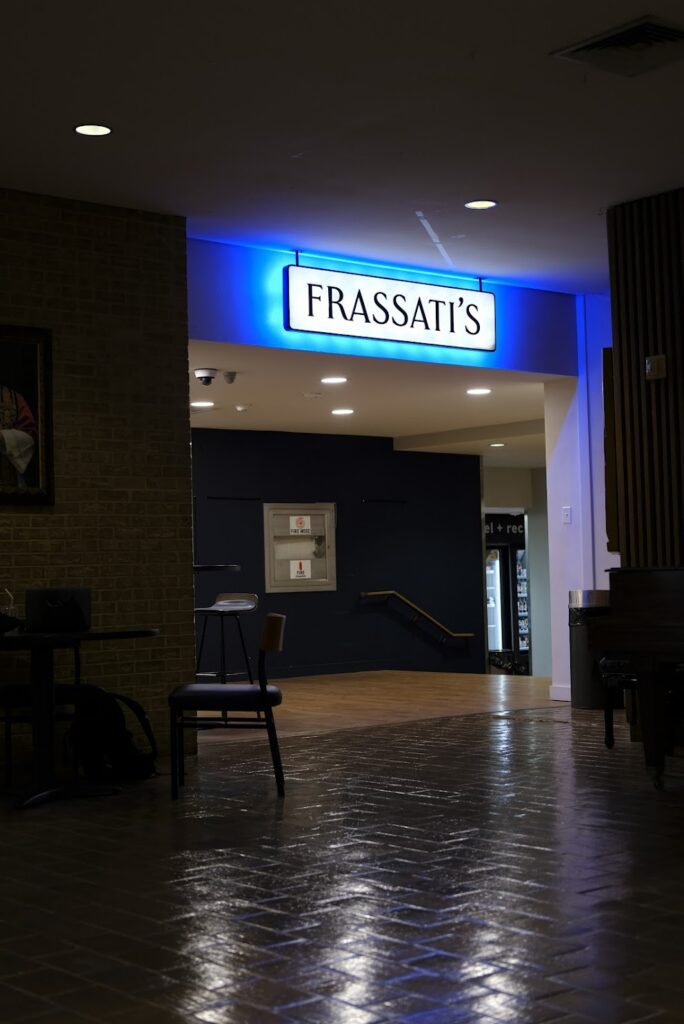
That’s not to say, however, that student concerns are unfounded. Juniors and seniors remember the uproar over Designated Smoking Areas and green boxes a few years ago. On top of these changes, as well as the Cap Bar shrinking, the Rat renaming, the emergence of Frassati’s and the Verkada app, UD’s cultural landscape has evolved hard and fast.
I really adore some new areas (such as the church lawn and the Rathskeller remodeling), but am still skeptical of many changes, especially because they often seem to come at the cost of some part of our culture.
The underlying issue that I—and, I suspect, many others—have with changes is simply that they don’t feel like they’re made for us. These changes feel directed toward attracting future students, not caring for current ones.
Things that were not widely asked for (for example: a second food court or new chairs and desks in Gorman) were installed, while what students have actively asked for (better washers and dryers or fixing the mold problems) went mostly ignored.
I don’t believe that all these changes are necessarily bad, or even in UD’s control. Aramark runs the food court, donors choose where their money goes and the Verkada app answered a common complaint students have. Green boxes were a fair response to people not returning silverware; Gorman’s new chairs are nice; and the church lawn is beautiful. And though it still has its downsides, I personally like the Verkada app.
I have to wonder whether there would be as much animosity towards the Verkada app if it had been less sudden and unexpected. The dislike that some have of the Verkada app is likely at least partially rooted in a deeper frustration at the chain of changes that has been lately occurring. It is frustrating to enter college, be told that we are adults, be told that this is our home, and then have little to no say in what happens here.
On the other hand, when students can’t be involved in the choices, explaining the rationale behind them would help as well—such as is the case with Dr. Roper’s email about the situation with the washers and dryers.
Perhaps the reason students are not asked for their opinions is out of a suspicion that they will reject anything different out of a prejudice against change. The best answer to this, I think, is for the administration to just ask the students their opinions, even in small things.
As far as I can recall, the only change which the student body at large was asked about was the Dumb Ox’s logo—and, noticeably, the Dumb Ox is one of the most well-received campus renovations. While students can’t and shouldn’t govern every change that happens on campus, working with them and keeping them informed seems like a good compromise.