
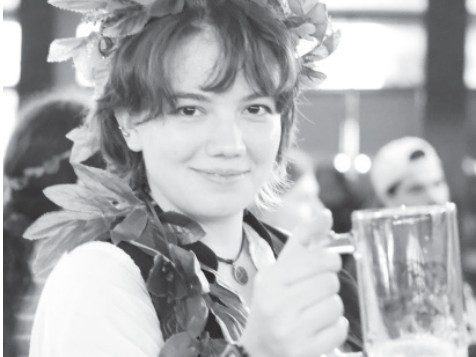
Thump, Thump, Thump — a plump mayor poised atop a podium taps a large keg till frothing gold spills into a waiting stein. He sips this amber and, as silver foam dribbles from his moustache, declaims the words announcing the beginning of Oktoberfest: “Ozapft Is!” (“It is tapped!”).
Be you a Teuton of the Prussian variety, a burgher in the Rheinland, well-to-do Thuringian, bold Bavarian, or nothing of the sort, Oktoberfest resounds to all ears of autumn ecstasy, Germanic pride and the blessed stuff called beer. However, this holiday only recently became a beer festival, and has undergone momentous changes as the years and the miles have passed.
The first Oktoberfest was held on Oct. 12 (arguably one of the most significant days across history) in 1810 to commemorate the wedding of Prince Regent Ludwig of Bavaria to Princess Therese of Saxe-Hildburghausen. At the prompting of Andreas Michael Dall’Armi — a banker and member of the Bavarian National Guard — King Maximillian I Joseph of Bavaria celebrated his son’s special day with a horse race and five days of festivity featuring poetry and gifts presented to the happy couple.
As 1811 rolled around, the Bavarian people cried for a repeat of the festival, which was granted at the expense and sponsorship of the Landwirtschaftlicher Verein in Bayern or “Bavarian Agricultural Association,” which began to promote agrarian output as part of the festival while maintaining the horse race. The festival continued as a harvest festival featuring local vendors and apparel until 1895, when the 18 permitted beer vendors (as stipulated by a 1825 decree) built the first temporary beer hall instead of the traditional booth.
In 1898, the Nuremberg festival host Georg Lang debuted the first large beer tent (dubbed 1. Bayerische Riesenhalle) with the help of straw workers, which inspired six major Munich breweries to replace field stalls with six festival halls in the 1907 Oktoberfest. It was only in 1950, following two world wars, the Great Depression, and a seminal partition of Germany, that the words “Ozapft Is” were proclaimed by Munich Mayor Thomas Wimmer, to the tune of a keg tapping (the worst recorded keg tapping in fact, with 17 taps).
Oktoberfest is similarly celebrated with beer, attractions and costumes in America, largely thanks to large numbers of German immigrants to the Midwest and Texas either fleeing the failed 1848 revolutions or looking for new land and prospects in the New World. However, the tenor of the holiday has changed along with its soil.
As opposed to a lavish wedding party, or a celebration of agriculture and (literally) homegrown tradition, American Oktoberfests celebrate being German and the Old World ethnic roots that fostered fresh communities in the New World. Much like Black, Asian and Hispanic Heritage months, Oktoberfest focuses on a cultural and tribal heritage which is not necessarily lived, but inherited, preserving a cultural memory beyond the limits of geography.