
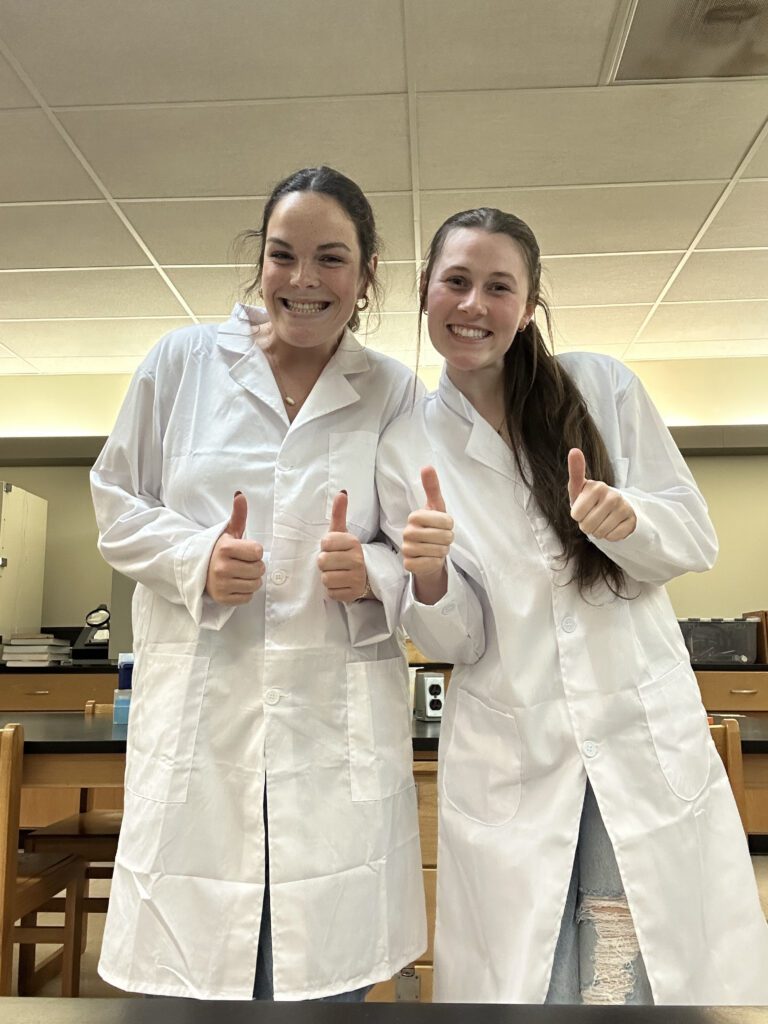
Academic charity can go a long way, especially for STEM majors.
We have all experienced the age-old debate over which is better, STEM or the humanities, science or literature, poetry or mathematics. We have all heard,— and agree with, I hope — the arguments for the importance of both in an education. In this article, I will not be writing on the inclusion of both in an education. I am writing on STEM, specifically the culture found within the ranks of pre-health majors.
UD is a unique school. Stereotypically, university pre-health, pre-med, pre-nursing and pre-dental students are cutthroat and competitive, hierarchical and elitist. UD, at least in my experience as a pre-health student, does not have this culture, thank goodness. However, I have found a perhaps more subtle culture of competition, one that doesn’t sabotage other students and their performances but can be equally destructive. This subtle culture is one of mindset, and specifically, of insecurity.
As pre-health students, we are discerning our calls to be helpers to the sick and needy —those in society who most need assistance. The healthcare field is not glamorous (ask any medical professional), and I would assume that most pre-health students know this. Nevertheless, there is a stereotype that surrounds the pre-health major, that he or she is an overachiever, a responsible person and “smart.” We hear the message fed to us since grade school: smart kids become doctors.
Consequently, many pre-health students combat feelings of inferiority, which manifests in imposter syndrome, and can lead to familial and societal pressure, and yes, even an unhealthy spirit of competition. I would be lying if I said I’ve never experienced any of these feelings before myself.
I would venture to say that these feelings may even be subconscious, underlying motivations, perhaps influenced by the romanticization of the medical field through TV dramas and social media. We live in a society constantly bombarding us with the idea that success is measured by the size of our salaries and the prestige of our job titles.
It is hard to divorce these societal motives from a genuine, God-given call to the medical field. It is hard to know if you are pursuing a pre-health pathway for the “right” reasons, that being a humble and selfless life of service to those in need.
Therefore, I am writing this article as a call to all pre-med, pre-nursing, pre-dental, pre-PA and pre-PT students, or anyone who is willing to participate. We are all needed as pioneers of a new pre-health mindset. Instead of worrying about who is already preparing for the MCAT, who is getting more shadowing or volunteering hours at their local clinic, whose GPA is higher and who is part of more clubs, we need to be each other’s support. The science curriculum is challenging enough as it is.
Lend that helping hand as a tutor, share your notes, say a friend’s name in a room of opportunities. Supporting someone else’s success will never be to the detriment of your own, I promise. At the end of the day, we are not each other’s competition: our greatest competition is with ourselves.
We must compete with our own feelings of inadequacy, superiority, perfectionism, obligation, ambition and self-worth before we can truly and honestly be able to call ourselves genuine medical professionals. Let’s encourage one another and strive towards a future where the sick are tended to and the wounded are healed.