
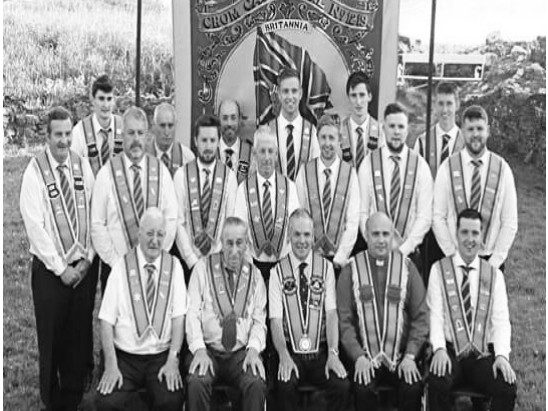
Sunday, Sept. 27, 2026, a march organized by the Protestant Orange Order attempted to pass through Portadown in Northern Ireland. It was blocked by hundreds of Catholic protesters and residents of the area. At the time, it was treated as an unlawful or “mob rule” protest preventing a legal court authorization. In order to understand the protest, we must first understand the recent history of Ireland’s “Troubles.”
The Troubles occurred between the late 1960s and late 1990s, ending in 1998 when the Good Friday Agreement was signed only 30 years ago. The Troubles were a violent struggle in Northern Ireland over whether or not Northern Ireland would remain a part of the United Kingdom or join the independent Republic of Ireland.
In addition to deep factional tension, acts of terrorism and political assassinations were frighteningly frequent. Over 3,500 people died during those years, and historical organizations are still trying to remember the victims. In 1994, the Irish Republican Army — a paramilitary group — declared a ceasefire in the hope of restoring peace, and in 1998, the Good Friday Agreement was signed.
Today, tension, division and gridlock remain; peace alone is established. In fact, many Northern Irish Catholics and Protestants live separate lives today, with over 90% of children attending schools segregated by religion.
In light of the Troubles, we can now consider the Orange march on Sunday.
In the States, we can demonstrate, march, hold signs, chant, give speeches, criticize the government and even counter-protest. The government can impose reasonable restrictions such as blocking traffic when a large march takes place. In Ireland, citizens can assemble peacefully and without weapons and can perform political criticism.
The An Garda Síochána, the Irish equivalent of our Constitution, states that it has no role in permitting or authorising public protests, and that no permit is required to organize one. Irish law can restrict or penalize violent, inciting or obstructive conduct —anything that causes a breach of the peace. The protestors responding to the Orange march were instructed to “sit down, link arms, and return if removed by the police.”
Northern Ireland Secretary Sir Chris Bryant believes maintaining the resilience of the political system in NI is crucial, saying “no one wants to dismantle the Good Friday Agreement.”
First Minister Michelle O’Neill described the court ruling as “disgraceful,” claimed an Orange procession was being ‘forced’ through the area and declared: “There is no going back. Not tomorrow. Not ever.”
Just as our founding fathers recognized, all people have the right to protest — if not in your opinion, at least legally. No one has the right to obstruct public access to services or spaces.
Even with a legally recognized right to protest, it is still up for debate whether the government can justifiably authorize a parade. I believe it can; obtaining a permit to perform a protest and requesting legal assistance in directing traffic is highly important. I believe, however, that the government cannot legally back a protest.
When protesters exercise peaceful assembly by intentionally preventing another organized group, the state government should not assist the parade in its completion (in this case, by removing or fining peaceful protesters).
I now bring up the ultimate context surrounding the event. The “Orange Marches” “commemorate Prince William of Orange’s victory over King James II at the Battle of the Boyne in 1690,” serving to remind of Protestant victory, Ulster heritage and British identity. They are historically viewed as sectarian and triumphalist. Sectarian refers to a religious group characterized as dissenting. Triumphalist, in a pejorative sense, is pride in the rightness and achievement of one’s Church. In this way, ensuring an Orange March passes through a Catholic area is, in my opinion, unnecessarily provocative. Why not hold the Protestant parade in the Protestant-aligned districts, instead of getting permission to navigate through a Catholic area? The intent behind the parade, in that sense, oversteps a boundary. The Orange Order is logically well aware of the implications behind the march. Would Catholics be similarly provocative? As of now, it’s unknown to me. From my knowledge, this sort of event doesn’t occur in the inverse. This September’s Orange Order march is an opportunity to compare the United States’ legal system with international ones, discuss solutions to division and factionalism, and appreciate the Roman clarity of national laws.