
Memes are not a new phenomena. Merriam Webster defines “meme” as “an idea, behavior, style or usage that spreads from person to person within a culture.” Memes are everywhere, and in the age of toxic algorithms and AI, I want to define what a good meme is.
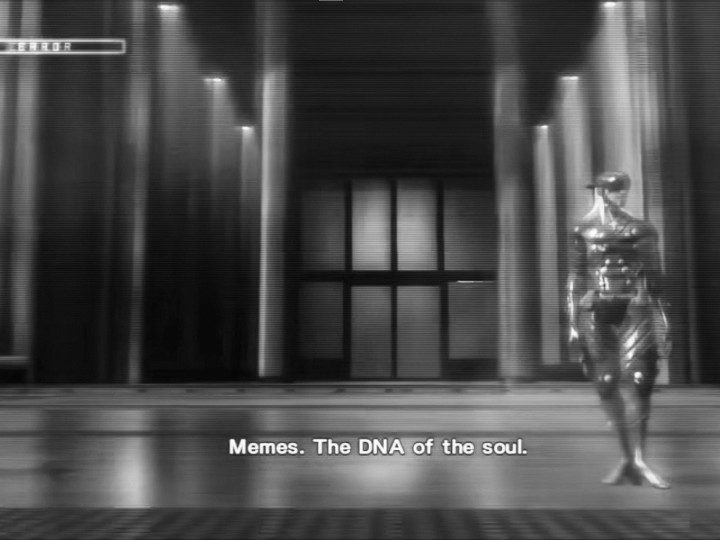
What are memes? The term meme comes from the 1976 book “The Selfish Gene” by Richard Dawkins. The term “meme” is a neologism defined as a unit of culture, carrying ideas, behaviors, symbols and practices. All UD students should be familiar with Homer. Based on the above definition, Homer is an ancient meme, as Homer is thoroughly referenced in other Greek literature such as Plato’s “Republic.” The video game “Metal Gear Rising: Revengeance” calls memes “The DNA of the soul,” a phrase which itself has become a meme. When people say “meme” today, however, they mean videos, images or phrases on the internet and pop culture.
Memes are creative and express things that plain text cannot. Most memes are taken from popular media like shows and movies, or from unlikely places. The first viral video in 1996 “Dancing Baby” was a simple video of a 3D baby dancing. Many memes are derivative of other memes. Rob Sheridan of “Nine Inch Nails” created the “The Unofficial Dancing Baby Homepage” where users submitted derivatives of the meme. Derivative works would become the core of memes thereon.
The often absurd “YouTube Poop (YTP)” is a popular genre of derivative works. A YTP is an absurd edits of a show or movie. Often nonsense, they show off creators’ impressive editing skills. Downstream of YTP, there are many “edits” on social media showing off the “hype moments and aura [sic]” of characters, movies and shows. Due to the nature of the internet, people are free from copyright constraints. Memes form a very important subsect of culture today, as it’s how people express their passion for things.
But memes have their downsides. Socrates objects to poetry in the “Republic,” stating that poetry is distant from the good and truth. Like Socrates’ rejection of poetry in the “Republic,” it’s easy to reject memes entirely because of how many of them push harmful and bigoted views, or seek humor in violence, far from what could be considered good and true units of culture.
Today, social media algorithms push negative and bigoted content intentionally to keep users engaged. Many memes try to pass off horrendous racism and misogyny as “jokes.” Some of these memes exalt misogynistic people, and try to imbibe disgusting views on women into teenage boys. Other memes make light of death, police brutality and evil regimes; and others push racist views using caricatures that should’ve been left in the past.
I despise bigoted memes, but I love memes in totality. Memes are wonderful things to express, practice skills like photoshop and video editing, be funny and to communicate beyond language barriers. In middle school, memes encouraged me to learn photoshop and make video games; skills that I developed would eventually push me into pursuing art. But if I was in middle school today on Instagram, I probably wouldn’t learn much of anything, because the algorithm doesn’t push skill or creativity.
Memes and the internet should never be used to separate people and push bigotry. Memes can go global from any point in the world. The internet is meant to break down barriers and allow humans to commune in a common culture, and allow people to express themselves outside of traditional constraints.
Recently, because of AI, people can generate images instantly. But my argument against AI is not about derivation or copyright law, things largely irrelevant in respect to memes.
The most concerning thing about the advent of AI is the images and videos used to push bigotry. These so-called “memes” are far more insidious than other bigoted memes because AI videos and images can look very realistic when glossed over.
But beyond bigotry, AI memes of all types contain no worth whatsoever. AI is trained to predict words based on what word is most adjacent within its pretrained dataset. Then the AI contextualizes the prompt using the previous text output to make everything seem coherent. An image generator works in a similar way, however it uses noise instead of text. It denoises the image based on the context of the prompt and tries to make an amalgamate close to what was prompted. The end result is a loosely defined and deformed amalgamation based on millions of images, and words, within its dataset.
AI can only amalgamate information and images; it cannot think, reason or create, nor can it discern biased, wrong or bigoted information, and certainly cannot imbue meaning into anything.
With this in mind my conclusion is simple: an AI image cannot and will never be a meme or a work of art. There is no culture or meaning to be had with an AI image. A meme’s purpose is to perpetuate human culture and express meaning. A poorly traced image of an angry man’s face expresses an anger far greater and clearer than any similar image generated by AI. An AI image is worthless compared to anything human made no matter how poor.
When you make a meme, show some humanity. In today’s age human creativity and skill has taken the backseat for AI and bigotry. Don’t be afraid to make memes even if you lack artistic or video editing skills, as G.K. Chesterton said, “Anything worth doing is worth doing badly.”
A bad meme exalts bigotry and meaninglessness. A good meme is something funny, expresses an emotion, or shows off a passion, letting creativity and excitement shine. Good memes are even more important today than ever before.