
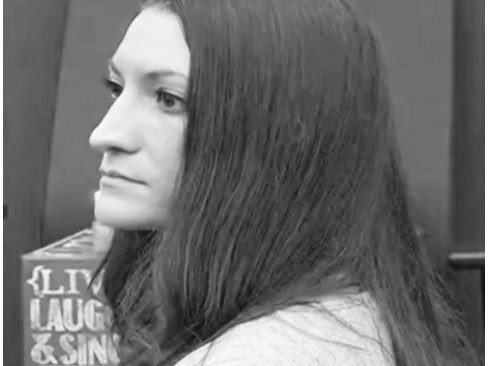
Every summer, there seems to be a court trial that captures everyone’s attention for a few weeks. A few years ago, Johnny Depp and Amber Heard’s civil case captivated the nation. In the 90s, the murder trial of O.J. Simpson was all the buzz. This summer, Lindsay Clancy’s name seemed to be on the tongue of almost everyone I know.
For those who don’t know, Lindsay Clancy is the Massachusetts mother who was put on trial this summer to determine her responsibility for the deaths of her three children. According to Clancy’s own admission, she strangled them with an exercise band then attempted suicide.
The defense pleaded not guilty to the murder charges by reason of insanity, and argued that she was not completely criminally responsible for her actions due to her postpartum psychosis. The trial eventually ended after seven weeks in a mistrial because of one juror holdout.
As I watched the discourse around the trial, I noticed something that has been growing clearer in recent years: somehow, people have gone from simply watching a trial and discussing it to becoming active participants in it.
Internet sleuths came up with alternate explanations and conspiracy theories. The question was no longer what happened in the court room — it was whose side are you on.
Why are people so incredibly fascinated with something as horrific as the murder of three young children?
Obsession with crime isn’t new. Lizzie Borden gained national attention in the 1890s for the murder of her stepmother and father with an axe. The murder of Nicole Brown and O.J. Simpson’s involvement gained extensive media coverage in the ‘90s.
People have always been fascinated by the darkest parts of humanity. The difference today is in the transformation of the viewer due to the rise of the internet and social media platforms.
The invention of the internet has birthed many things, and the strangest are possibly so-called internet detectives. People watching the Clancy trial went from viewers to actual participants. During the trial, the internet involved themselves by coming up with alternate explanations and conspiracy theories.
The defense even directly involved the internet by calling a TikToker as a witness. Her testimony was eventually ruled inadmissible for the jury, however.
Many people came up with theories about Clancy’s husband Patrick being the real murderer, or a theory about his alleged adultery. They have also dug into the past of the juror holdout, which has led to harassment.
The internet has taken what I believe is a somewhat normal, human fascination with crime and turned it into an obsession. The need to know every detail, investigate every person in the case and often create a narrative that is more entertaining than the factual one is becoming increasingly common online.
They don’t just want to know what happened anymore. Rather, they want to solve it themselves.
Don’t get me wrong, I am a firm believer in public trials and journalism. People have a right to know what goes on within our judicial branch. True crime can raise awareness about victims, safety issues, the justice system and injustices within our country.
There is value in paying attention to these stories, especially when doing so brings awareness to issues that may otherwise escape our notice.
But, at what point does journalism on the internet stop being reporting and, instead, becomes a desire to consume someone else’s suffering?
When we treat trials and crimes like entertainment, we forget what they actually are: crimes with victims. Behind every headline and every Instagram reel, there is a real person whose life has been impacted.
Many of the people online, oftentimes making money off this topic, seem to have forgotten the center of this case: three murdered children and a destroyed family.
It is easy to forget that, when a case has become a headline, the people involved are not fictional. We can discuss evidence and court proceedings without turning suffering into entertainment.
Lindsay Clancy is an example of the internet going too far and ignoring that, at the center of all this, there are three victims: Cora, Dawson and Callan.
Editor’s Note: This story includes discussion of suicide. If you or someone you know needs help, the national suicide and crisis lifeline in the U.S. is available by calling or texting 988. At UD, email counseling@udallas.edu.